Wednesday, June 27, 2012

Square changes the geometry of payments

The cashless society requires an alternate payment system. Square may be that system.

Chris Skinner discusses the Jack Dorsey's strategy

But the most outrageous part was how easy it suddenly became for anyone to accept credit cards, using a device they already owned. The process through which businesses are authorized to accept credit card payments is notoriously arduous and slow, particularly for small merchants. The issuing banks demand multiple proofs of creditworthiness and pile on extra fees. Square itself had difficulty negotiating that red tape—it took longer to get approval from Visa and Mastercard to accept a swipe than it did to create a prototype for the entire payment system. “Our sign-up process takes literally two minutes,” Dorsey says. “You download an app, put in your name and address, answer three security questions, link your bank account, and you’re done.” Andersen saw the potential. Just as Twitter democratized broadcasting, Dorsey’s new company would democratize the credit card industry. 

Henderson, the engineering lead on Pay With Square, points out that the company collects all kinds of information about its users, data that might be invaluable to merchants and customers alike. “First of all, we know your location,” he says. “Second, we have a decent sense of your history. We know the kinds of places you’ve been and what you like. But we also know lots of other things—like if there’s a whole bunch of food trucks that pull up nearby, we’ll see the spike in activity and can point you to those trucks. I think you’ll see us get really good at this.”
Analytics and data-mining might provide Square’s real business model. So far, the company has charged a very small fee for each transaction, and merchants aren’t likely to pay much more. And while Square has been giving participating merchants access to analytics about their businesses for free, it is also aggregating that data, real-time information about what people are buying in every region of the country, complete with detailed demographics. It’s reasonable to think that might be very valuable in the near future.

Raise awareness among your customers


Danielle Schlanger and Kim Bhasin highlight the fast casual juggernaut that is Chipotle. Sometimes you need to raise awareness.


Looking back at the early days of Chipotle, CMO Mark Crumpacker admitted that they overestimated how much people actually cared about animals and the environment. He had to shift its marketing.


"It turned out to essentially not be true," Crumpacker said at a conference earlier this year. "Only 20 to 30 percent of those people actually care about that stuff."
So, Chipotle had to revamp its marketing focus. Instead of only touting all the great stuff it's doing, it had to raise awareness for environmental issues and get people to care about making a difference.

Training, training and more training

Celeste Edman highlights the continual need for training


Recently, I ate at a casual Italian restaurant. I was looking forward to the experience as the owners excelled at their fine-dining Italian establishment so I was interested in their take on casual. When I arrived, I was greeted by a welcoming host. We were seated, given menus, and told our server would be right with us. So far, so good. We waited. And we waited. And, we waited. Finally, the server arrived and asked us if we were ready to order. We asked about specials. There were none. Any recommendations on a starter, we asked? "There's some bread on there that's supposed to be good", he said to us.

It was in fact, very good. All the food was outstanding, but the service got progressively worse. When asked what his favorite pizza was, he informed us that he tried not to eat it because it made him fat! 

The owners had obviously taken great care to ensure quality products were used in their food, the décor was deliberate and specific to their brand, and the overall ambiance was good, however the server was so untrained and so incompetent that we won't be back.

Every person in your restaurant plays a role in your customer's experience. With thoughtful attention to your process and in turn your customer, you'll ensure consistency over all.

Wednesday, June 20, 2012

Summer's day


 Bill said it best a long time ago


 Shall I compare thee to a summer's day?
Thou art more lovely and more temperate.
Rough winds do shake the darling buds of May,
And summer's lease hath all too short a date.
Sometime too hot the eye of heaven shines,
And often is his gold complexion dimmed;
And every fair from fair sometime declines,
By chance, or nature's changing course, untrimmed;
But thy eternal summer shall not fade
Nor lose possession of that fair thou ow'st,
Nor shall Death brag thou wand'rest in his shade
When in eternal lines to time thou grow'st.
So long as men can breathe or eyes can see,
So long lives this, and this gives life to thee. 


William Shakespeare 

Summer joy is upon us


The shortest night of the year has just ended. The Earth has reached the farthest point of its orbit around the Sun which does not know it is a star.  The northern tilt of the Earth is now at it's maximum. The conquest of light begun at the Winter Solstice is now complete. Enjoy!

A nice chart explaining the sunlight differences around the northern hemisphere At 6:09 p.m. (CDT) today, the sun will shine directly overhead at the Tropic of Cancer while the North Pole reaches its maximum tilt towards the sun. For the Northern Hemisphere, this marks the official start of summer and the longest day of the year.


Wednesday, June 13, 2012

automated production

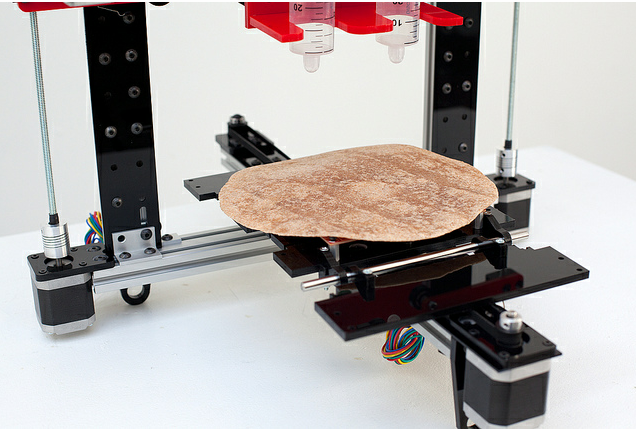
What is the number one issue every restaurateur deals with, labor. What is the number one complaint of customers, rude or inconsiderate staff. Well look here, John Biggs introduces us to the BurritoBot

The system will let you use your iPhone to order different condiments and toppings. Sliders control the amount of salsa, guac, and crema. It uses a Thing-o-matic and is currently in beta form, so don’t expect it to make you a burrito anytime soon.
Its creator, Marko Manriquez, is a student at the Tisch School of the Arts at NYU and this is part of his Master’s Thesis. Remember back when you wrote your thesis? About politics or some junk? Yeah, you should have picked the “build a freaking burrito robot” major. You wouldn’t be an accountant right now.


Saturday, June 9, 2012

No one needs us anymore

All business is predicated on relevancy, once that fails you have got nothing. Any business needs to add value to the life of the customer. If that is taken away either by technology or a competitor that does things differently, your business model will not survive. 3D printers are on the way, business services can be outsourced, we are not that far away from a holographic doctor. How will your business remain relevant and add value?

Scott Ginsberg makes an incredible point for any business model.

 
Proof once again, there’s nothing more frightening than the prospect of irrelevancy.

The only problem is, no one needs us. We’re a dying breed. Everything people used to need from us – information, answers, ideas and advice – is available to them right now, for free, in perfect form, forever.

It didn’t used to be that way. There was a time when we were vessels of knowledge. Pillars of wisdom. Narrators of the story of life. And paragons of experience that those who were hungry could climb mountains to pursue, even if only to touch the hem of our garment.

But now people just google stuff. Nobody needs to wonder, think, reflect, ask, create, mediate, listen or read.  Just download, verify and repeat. Download, verify and repeat. And if we don’t do something to reverse this trend, our species is not going to make it. If the pendulum doesn’t start to swing the other way, we are not going to last.

Human beings are social creatures. We need to need each other. Our craving for belonging, connectedness and togetherness is no less essential that food, water or shelter.

But if we insist on ignoring, avoiding and circumventing each other – if we continue to solely depend on the pixels of digital surrogates instead of the perspective of actual people – we will continue to become less human by the hour.

Eventually, we’ll serve no purpose other than fleshy holsters for electronic devices.

We don’t need more access to information.

We need more access to each other.

Tuesday, June 5, 2012

Transit of Venus

A gentile reminder that we are not alone in the universe. The planet Venus will come between us and the Sun today at 5pm CST. The planet will be visible as a black dot moving across the surface of the Sun.

Wednesday, May 16, 2012

Consumers create jobs

Nick Hanauer's Ted presentation that explains it all.


In a capitalist economy, the true job creators are consumers, the middle class.  And taxing the rich to make investments that grow the middle class, is the single smartest thing we can do for the middle class, the poor and the rich.


hat tip Alltop


Jim Tankersley article

Tuesday, May 8, 2012

Power transference is illusory

Restaurant's use the visit of a famous or powerful individual to sell the idea that this place is a must visit. Everyone wants to associate with powerful beautiful people and wants to frequent locations where these individuals congregate. Everyone wants the feeling of the illusory power transference. The problem is of course that it not real. When a local sports team wins a championship there is little tangible improvement in the lives of the individuals in the locality however everyone feels a sense of belonging and a surge of power from the success of the surrogate team.

Robin Hansen explains:


“Illusory Power Transference” is the academic name for feeling powerful due to a superficial connection to a powerful person, such as having once been in the same room:

...
 
We propose that … associating with the powerful CEO suggests that he, too, must be powerful. Moreover, this minimal connection with the CEO would actually lead him to act as if he personally possessed more power when making important decisions on the job and interacting with others. ….
We use two experiments to … demonstrate that men who have a tenuous association with a powerful other (versus a powerless or equal-power other) felt more powerful and were more optimistic, confident, and risk seeking, even though they could not leverage the associate’s power. (more; HT Tyler Cowen)

Leadership sins

Mike Figliuolo reviews the seven deadly sins and how it impacts the people that make your life a heaven or a hell


Greed
If you’re in leadership role for the money, you’ve got it all wrong.  You’re responsible for the care and feeding of the people around you.  Doing it for cold, hard cash is the antithesis of being a servant leader.  Don’t get caught focusing on the raise, the bonus, or the corner office.  It will come back to haunt you when everyone on your team quits in search of a leader who cares more about them than they do about stock options.  Keep your priorities straight – if you lead well, the compensation will naturally follow.

Monday, March 5, 2012

first movers get steamrolled by execution

Paul Barron has a thoughtful perspective on the many variables necessary to make an enterprise work

So let’s look at what Chipotle has done right and how it’s changed the restaurant business.
Chipotle may not have fired the first shot in the fast casual revolution, but the fresh Mexican chain is certainly the most famous of the founding fathers. Launched by Steve Ells in a space near the University of Denver in 1993, the restaurant grew quickly, opening its second location in 1995 and continuing its expansion — first with a loan from Ells’s father and later with a $1.8 million Small Business Administration loan. Ells, who had no business background, had clearly tapped into an unmet need among diners for healthful, fresh Mexican cuisine, and the Chipotle brand began to take shape: sustainably sourced ingredients, a simple menu, and impeccable quality.

In 1999, Ells opened his first restaurants outside of Colorado, but it was interest from McDonald’s Corporation that was the magic bullet for the company’s growth. The fast-food titan first approached Ells in 1997 and became a minority investor a year later. Contrary to popular belief, McDonald’s did not buy Chipotle but did become its largest investor, sinking more than $360 million into the chain over seven years and helping Chipotle make use of its proven distribution system. By 2005 the chain had more than 500 company-owned restaurants, and in January of 2006 it made its initial public stock offering (IPO), the stock doubling in value on the first day of trading.

In 2006, McDonald’s divested itself of its Chipotle holdings, earning about $1.5 billion on its investment. Today, the company has restaurants in 38 states and Canada, was the third-fastest-growing restaurant chain in 2010 according to Nation’s Restaurant News, and was ranked as the best fast-food Mexican chain in 2011 by Consumer Reports. Most recently, the company hired award-winning chef Nate Appleman to create new menu items and spearhead the creation of a new fast casual Asian concept restaurant, ShopHouse Southeast Asian Kitchen, which opened in Washington, D.C., in the summer of 2011.

In my humble opinion, Chipotle was simply in the right place at the right time with the right product. But this does not mean that their success has been due to pure luck. You can have the right place, time, and product going for you, but you have to know how to leverage them. True, the company was not the first “Fresh Mex” concept, the first burrito player, or the first creative brand builder. But they knew how to grab the gold when the opportunity came. Having watched the mistakes of their predecessors, they were able to develop an in-store and external brand that tapped into what their customers cared about: freshness, quality, sustainability, a sense of humor, and above all, a sense that they were breaking out of the “slightly more upscale fast food” mold of chains like La Salsa and Baja Fresh.

Among other things, Chipotle’s success is another nail in the coffin of the “first mover advantage.” There have been many companies and people in history who have come late to the dance and yet prevailed as the leader in their industry. It’s not always the first mover who winds up “owning” the category; another player who enters the market later and takes advantage of the pioneer’s mistakes often rises to the top.

Thursday, February 16, 2012

create the context for work to get done

Brad Feld explains the need to create an environment that is motivating;


If you generalize this, it plays out over and over again every day. The great entrepreneurs I know work incredibly hard at creating environments that are motivating. They don’t pound away at the specific task of “motivating people”, rather they pay attention to creating context, removing barriers, being supportive, putting the right people in the room, and leading by doing. All of these things create a context in which people are motivated.

Monday, February 13, 2012

The quiet of a snowfall


The heart of the city is a boisterous resonating enclave. People and vehicles are continually juxtaposing nosily for position on the very limited concrete that the streets and sidewalks afford. Add the hum of buildings, the swoosh of revolving doors, horns from aggrieved  drivers, the vibrations, the static dim and the decibel levels are deafening.  

On a winter afternoon, imperceptibly at first, snow starts to fall and fall and fall. The sounds of the city that were so pervasive earlier begin to muffle.  The clap of shoes against the sidewalk is not discernible in the gathering snow. The reverberation of the cars pressing against the road is cushioned by the new fallen layer of powder. The chatting of passerby’s is absorbed by the crystalline formations floating in the air. The hum is modulated, the swoosh is stilled, the horns grow silent, the vibrations are dampened, the all-pervasive dim is gone, the lights flicker without the accompany pitch, the daily tasks continue to unfold though at a slower pace, the harmony of movement itself takes on a dream like quality. The melody of the city softens. The snow falls and a resonating city is peacefully blanketed by the quiet of a snowfall.

Wednesday, February 8, 2012

Taking control of events

There are a lot of lessons that can be gleamed from Sunday's Super Bowl finish. First let me set the stage.

Your team is leading, time is winding down in the game. The opponent is getting very close to scoring the winning points with no time on the clock. The probability of scoring is high thou not absolute. The coach of the Patriots chose to allow the Giants to score uncontested, thus giving his team the chance to come back and win themselves.

1)    I give the coach all the credit in the world for making a decision. He chose to take control rather than let events unfold. To often we use hope as a strategy and tend to be reactive. His proactive response thou not successful in this instance is the template for the decision making process going forward.

2)    Yield and conquer is hallmark of Lao Tzu's classic "Tao Te Ching"

3)    Goals require risk.

Sunday, February 5, 2012

Kicking the can down the road

Joshua Brown  explains the last six years pretty succinctly. This has not been your average Great Recession. Individuals and businesses that are still drawing breath have had to adjust in major ways.


We've all been through the ringer.  Some of us have gained a little extra weight and sprouted some premature white hairs.  Some of us have had to give up things and activities we loved.  Some of us have downsized our lifestyles substantially.  This economy has cost us all something - vacations, cars, jobs and even marriages.

And when you're living in a state of lowered expectations for so long, it becomes easy to imagine that this is the way it has to be.  That this is it and the best you can do is not get killed.

But...

But what happens if the treadmill speeds up beneath our feet?
What if this is for real now after so many stutters and stoppages?
What if people keep getting jobs and giving jobs?
What if the malls and the restaurants and the morning commuter trains start filling up again?

Are you ready for that?  Have you done anything over the last few years to set up for that possibility?  Or have you spent all this time in the bunker, doing nothing because of "the conditions out there"?

It's okay if you've been in hiding.  Or just shuffling through the months with your head down so it couldn't get chopped off again.  We all did a little of that.  But you might want to consider rubbing your eyes and coming outside.  You might want to consider emerging and shaking off the bunker dust.  Because there will be a future after all, gang.  And the people who can switch their mindsets the fastest are gonna own that future.  Same as it ever was.
...
The "Vision Thing" plays a big role here - we're not talking about mindless optimism, we're talking about guts and planning.

And worse than the losers are the haters, the glass-is-always-half-empty crowd.  "But it's not enough jobs added, and it doesn't matter because of the debt, and Iran, and Europe, and China, and oil prices..."  What makes these people so dangerous is that they are absolutely right on the details but dead-ass wrong on the consequences.  And they have no context.  They don't
understand that throughout history shit has always been fucked up and yet people find a way to get things done and move forward.  It will be no different now, but the haters have so many statistics handy to keep you out of the game, under the bleachers with them and the rest of the cowards.

You know the type, the guy who looks at a solution or an improvement and says some stupid shit like "But they're just kicking the caaaaaaaaaaan, all they're doing is kicking the caaaaaaaaaan."  Do me a favor, bro - grab yourself by the hair, yank your head down into an overflowing sink full of water, hold your face under it until you stop wriggling.  You think I want to spend the last forty or so years of my life listening to you whining about kicking the can?
By the way, kicking the can is good.  Rather, having the flexibility to kick the can, which we do, is a good thing.  If you've ever run a business then you know this; you have a list of things you can spend on now and then you have a list of things you'd like to spend on when you're in a better financial position to do so.  Sure there's a moment when you have to take some pain, but being able to choose the moment is not a negative, no matter what the ideologues say.
And go to the gym.  Go do some push-ups or run around the block.  You're far less susceptible to self-defeating negativity when the blood is flowing and you're active.  This is more important now than ever.  The winners of the next phase are the people with the most energy.  The entrepreneurs who are willing to invent their own jobs where none exist and can will themselves into a career whether the Man in the Suit said so or not.  You can't kick the door down and walk into a room chest n' chin first if you're lethargic and fat.  Get the fuck up already.  Ritholtz is in the gym right now, y'all.

This is not about keeping a stupid New Years Resolution or anything quite so pedestrian.  This is about something so much bigger, a purpose so much higher.
I have no idea when this secular bear market and the attendant economic malaise will truly be over - but I know for a fact that if you're not planning for its end you're going to miss your chance.  You'll be flatfooted for the pivot, too close-minded for the turn, too fat for the sprint that begins when those Animal Spirits take hold.

So get your shit together.  Now.